
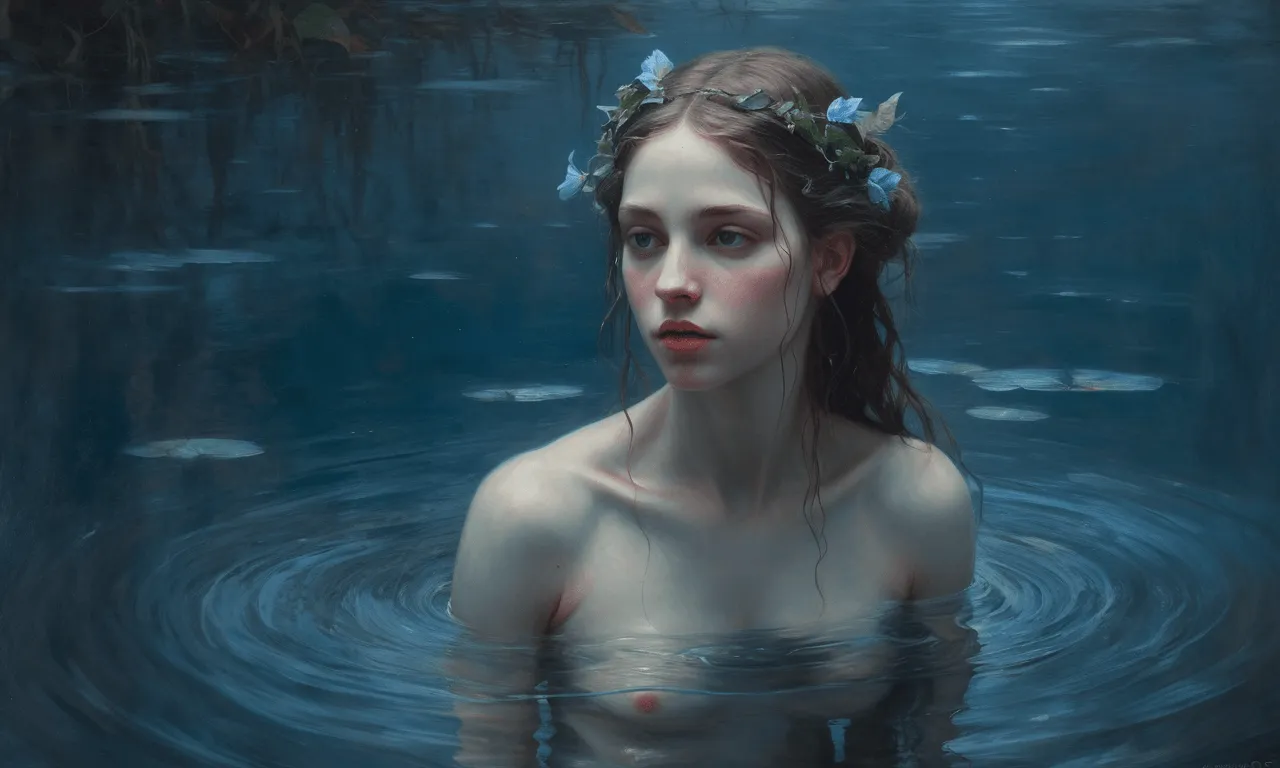
The spirit beneath the surface
As the shimmering boundary between humanity and the elements, the spirit of the water nymph has always been a part of human history. Throughout centuries, spanning various art movements from the Baroque to the Victorian and Symbolist eras, artists held the figure of the water nymph in high regards — the symbol and the innocence that were never lost.
In ancient myths, she was the embodiment of rivers and springs. In Romantic art, she became the whisper of emotion — unattainable, fragile, and quietly powerful, silently dominating over the earthly concepts. Something about her remains timeless, that’s exactly why the nymph isn’t merely a woman or a creature of water — she’s the very idea of fluid beauty, of emotion that can’t be contained by any form.
A deeper theme that changes with every era
Painters of the nineteenth century saw her as purity and melancholy. Hylas and the Nymphs by John William Waterhouse (1896) depicts the moment Hylas is enticed by several beautiful Naiads while seeking drinking water. In The Play of the Naiads by Arnold Böcklin (1886), one can witness the presence of numerous water nymphs around a craggy rock, playing in the stormy sea. From The Nymph of the River by Frederic Leighton to Slavic themes, such as Rusałki (Water Nymphs) by Witold Pruszkowski (1877), youth has been tempted by the mysterious nymphs, sometimes to a gruesome end, and sometime to witness the true face of untamed nature.
Modern artists often reinterpret these mythical beings as freedom and digital transformation — a mirror for the age we live in. Whether in oil or pixels, her dazzling reflection keeps shifting, yet the fascination never fades. Each artwork that invokes a Naiad and her watery depths, carries an unspoken question: What happens when emotion touches the surface of reality?
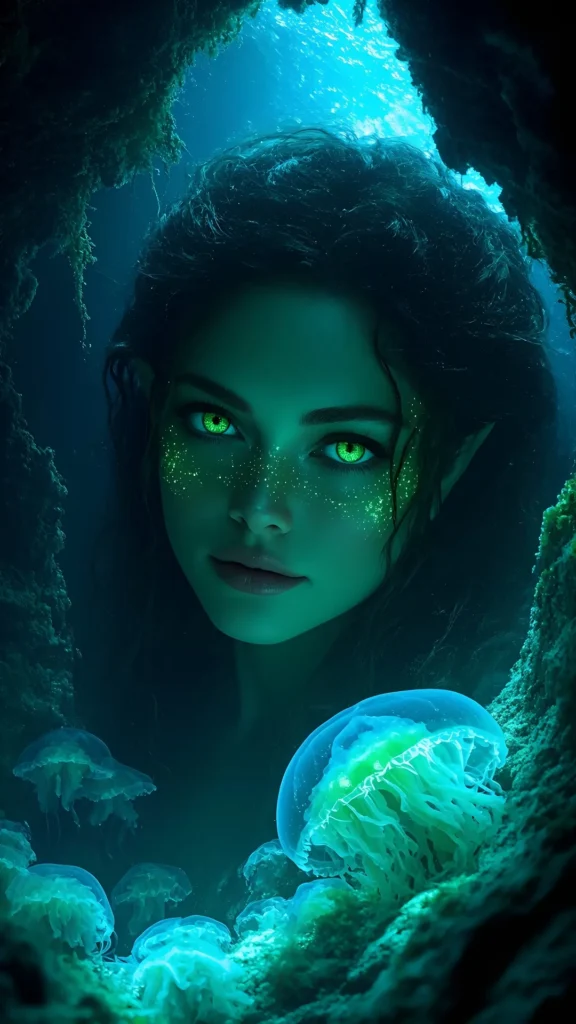
Why the nymph still matters…
In a world that feels increasingly artificial, the nymph draws us toward something organic, instinctive, and deeply human. She is nature’s quiet rebellion — not loud or violent, but persistent, beautiful, and impossible to own. Seemingly, she is just a minor member of the Pantheon, but she often rises up to the surface and becomes the living ocean Muse, the embodiment of nature itself. Every brushstroke that captures her form is an act of remembering: that’s why beauty and mystery are not enemies of reason, they’re the balance and the quiet hidden away behind decisive brushstrokes.
Even now, artists continue to summon her — on canvas, through digital textures, or in the shimmer of print and light. Each modern nymph tells her own story: some tranquil, some dark, but all are born of water and imagination.
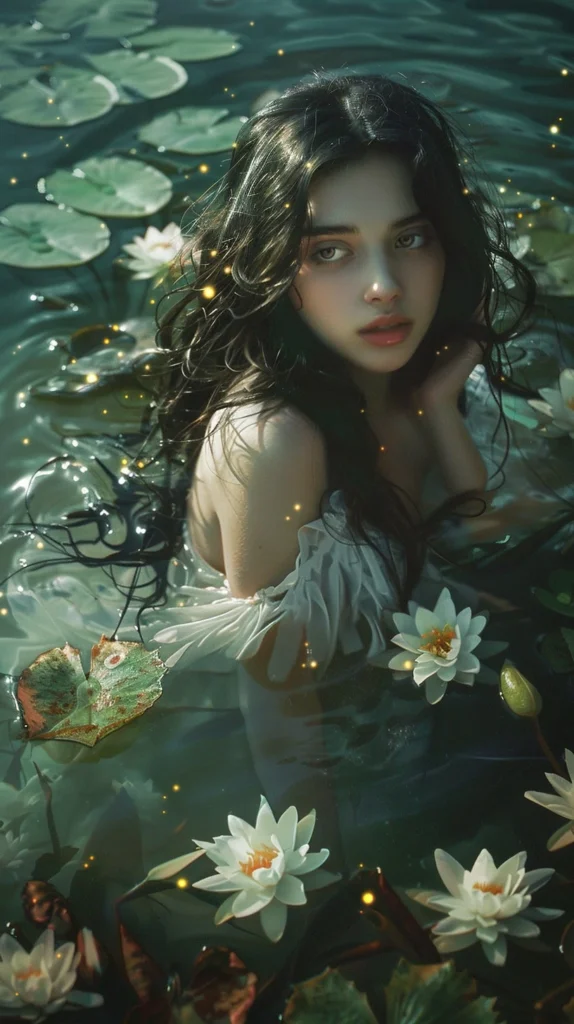
The art of reflection
Perhaps the nymph endures because she reminds us to look deeper. We are supposed to see beauty not as an escape, but as an invitation — to feel, to change, to remember… this is what it means to be tempted by the grace of Naiad, to hear and submerge, to witness what moves beneath the surface… and maybe, that’s exactly what every true artwork is meant to do.